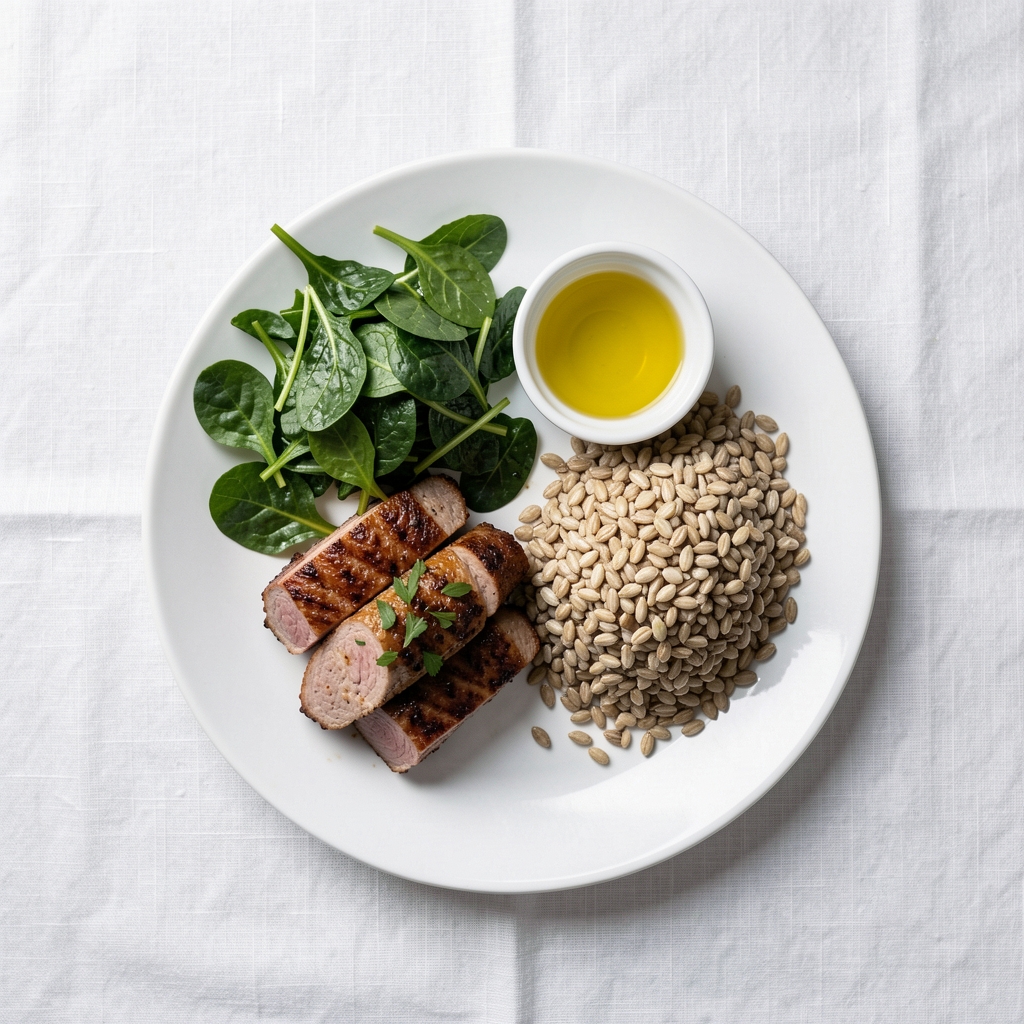
Mindful eating is frequently described in terms of psychological practice — the attentiveness brought to a meal, the reduction of distraction, the deliberate slowing of pace. These descriptions are accurate as far as they go. What they omit is the operational relationship between eating rate, satiety signalling, and calorie intake — a relationship that produces measurable outcomes independent of any particular psychological framework.
Satiety Signalling and Eating Rate
The satiety signalling pathway operates on a delay. Fullness cues produced in the digestive system reach the brain approximately 15 to 20 minutes after the food that triggered them was consumed. The practical implication is that an individual eating quickly can consume substantially more food than the body required before the satiety signal arrives. The rate of eating, not the absence of hunger, determines the terminal point of most fast meals.
Nutrition research examining meal duration and calorie intake consistently identifies a linear relationship: longer meal durations correlate with lower calorie intake per sitting, across diverse populations and food types. The mechanism is not attentiveness per se — it is the physical timeline of digestion. Slowing eating rate extends the meal into the window where satiety signalling becomes active, allowing appetite regulation to function as intended.
A practical proxy for eating rate is the chewing count per mouthful. Nutritional guidance frameworks that specify 15 to 30 chews per mouthful are not arbitrary — they are calibrating meal duration to the satiety-signalling timeline. The specific number is less important than the principle: each mouthful should be fully processed before the next is taken.
"Reducing screen exposure during meals is, operationally, a form of portion control — one that requires no measurement and produces consistent outcomes across different eating contexts."
— Eleanor Whitfield, Talep Letters
The Role of Distraction in Portion Outcomes
Distracted eating — meals consumed while engaged with screens, work tasks, or other high-attention activities — produces a specific and well-documented outcome: reduced awareness of consumption volume, and elevated calorie intake relative to attentive equivalents. The effect operates through two pathways. First, distraction reduces chewing attention, which correlates with reduced chewing thoroughness and faster eating rate. Second, distraction reduces the registration of satiety cues, which the digestive system is producing but the brain is not processing with adequate priority.
Research on this point is unusually consistent across experimental designs. Whether the distraction is television, a work screen, an audio programme, or social media, the directional outcome is the same: more food consumed, less satiety registered, lower accuracy of post-meal calorie estimation. The degree of effect varies by distraction type, with high-engagement visual media producing the largest difference from undistracted controls.
The practical application within a meal-planning framework is straightforward: designate the main meal of the day — typically the evening meal — as a screen-free period. This single structural adjustment consistently reduces average calorie intake for that meal without requiring any other modification to the diet. It is one of the lowest-effort, highest-yield interventions in the everyday nutrition literature.

Undistracted meal setting — reference photograph, January 2026
Building Portion Awareness as a Practiced Skill
Portion awareness is not an innate capacity — it is a practiced skill that develops over repeated meals with deliberate attention to serving size. The initial calibration period typically runs three to four weeks, after which the practitioner develops reliable visual and tactile reference points for standard serving quantities without requiring scales or measuring tools.
The calibration process is structured as follows. For two to three weeks, weigh or measure standard servings of the most-used ingredients in the weekly menu: the primary protein, the grain base, and the primary vegetable portion. Note what each measured quantity looks like on the plate and in the bowl. After three weeks of this observation, cease measuring and begin estimating. Track the accuracy of estimates against occasional spot-checks for a further two weeks. Most individuals reach reliable estimation at the five to six week mark.
This process is more reliable than permanent measurement dependence, and more accurate than uncalibrated estimation. It produces an individual with a durable, internalised portion-awareness framework that functions across different eating environments — including restaurants, social meals, and work lunches where measurement is not possible.
- ■ Satiety signalling operates on a 15–20 minute delay; faster eating consistently produces higher calorie intake per sitting than the body's actual energy requirement.
- ■ Distraction during meals reduces post-meal satiety registration and elevates calorie consumption regardless of distraction type.
- ■ A structured five-to-six week calibration period produces reliable internalised portion-awareness without ongoing measurement dependence.
- ■ Screen-free main meals represent a low-effort, structurally effective approach to calorie awareness that requires no dietary modification.
Chewing Thoroughness and Gut-Friendly Digestion
Thorough chewing is the first stage of the digestive sequence, and the one most directly within voluntary control at the meal table. The mechanical breakdown of food in the mouth reduces the particle size that enters the stomach, which in turn reduces the workload on the digestive system and improves the extraction of nutrients from each mouthful. For fibre-rich diets specifically, adequate chewing is particularly important — poorly chewed high-fibre foods can reach the lower digestive tract incompletely processed, reducing the gut-friendly benefit that the fibre was intended to provide.
Gut-friendly recipes — those incorporating fermented foods, legumes, root vegetables, and whole grains — produce their intended benefits only within a digestive system that is receiving adequate mechanical pre-processing. This is an area where eating behaviour directly modulates the nutritional output of an otherwise well-designed diet. The recipe is not the whole story; the eating practice is its complementary component.
The practical method for improving chewing thoroughness within a busy week is to build in one designated slow meal per day — typically lunch or dinner — at which pace is actively managed. This does not require every meal to be a contemplative exercise. One structured slow meal per day, repeated consistently, is sufficient to shift average eating rate and its associated digestive outcomes across the week.
The Food Journal as a Mindful Eating Tool
The food journal occupies an interesting position in the mindful eating literature. It is, technically, a measurement and recording tool — which might seem to contradict the orientation toward intuitive, attentive eating. In practice, the two approaches are complementary rather than opposed. The journal's function is not to impose external measurement on every meal, but to surface patterns that attentiveness alone cannot reliably detect over a multi-week period.
A practical food journal for everyday nutrition practice records three data points per meal: what was eaten, approximately how much, and the hunger level at the start and end of the meal on a simple 1–5 scale. This minimal record, maintained for two to four weeks, produces a reliable pattern map: which meals routinely end at hunger level 4 or 5 (indicating overeating), which are completed at level 2 or 3 (appropriate satiety), and whether particular food types or eating contexts correlate with the lower-satisfaction outcomes.
The journal is not a permanent fixture. It is a calibration instrument used periodically — at the start of a new dietary framework, or when eating patterns have drifted and a recalibration is needed. Most practitioners use it for three to six weeks per year, not continuously.